HL-01

USB Wi-Fi HaLow with an external SMA antenna connection.

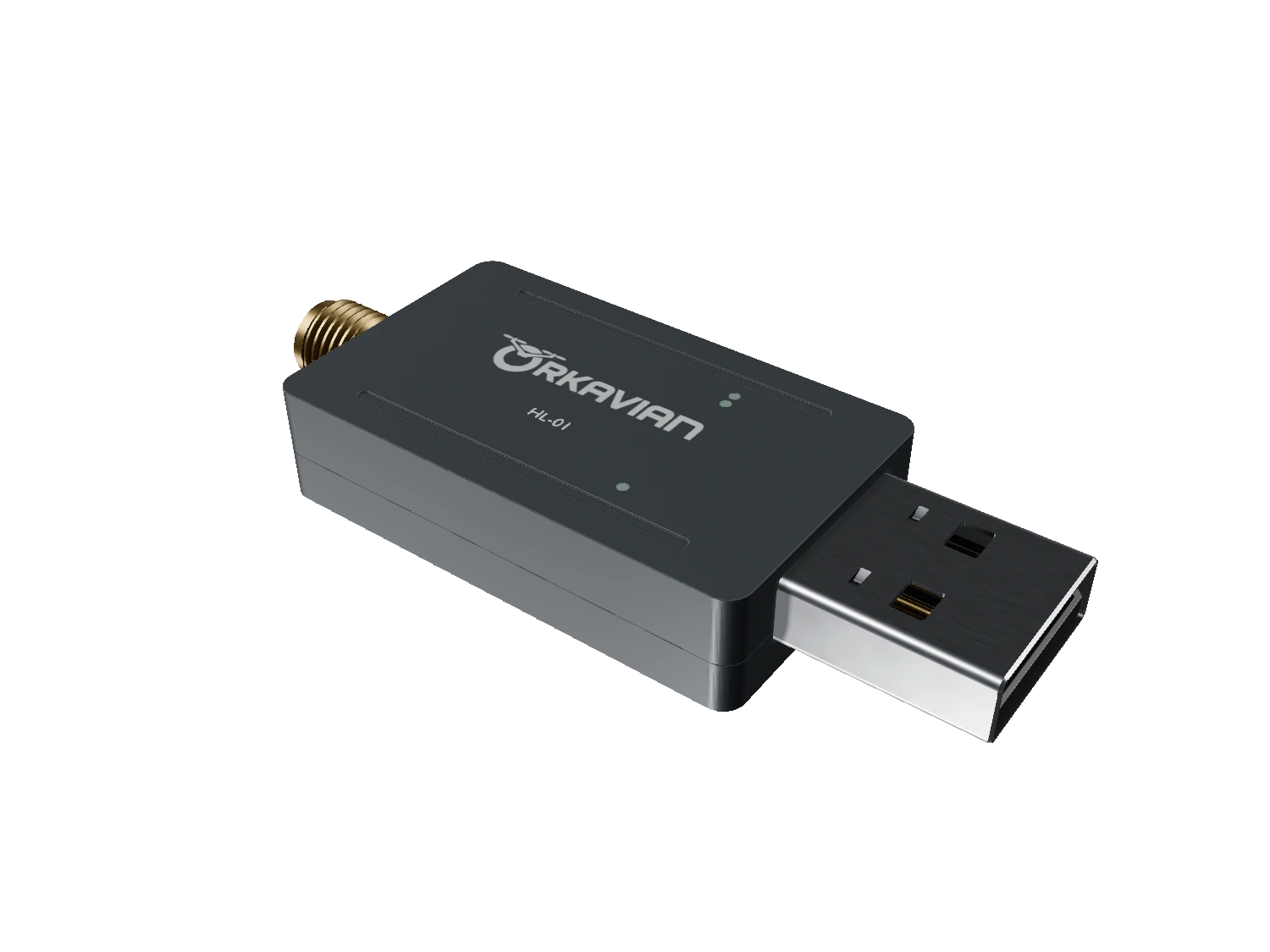
HL-01 is a USB Wi-Fi HaLow adapter for sub-GHz IP networking. It combines a USB 2.0 High-Speed host interface with a standard-polarity SMA antenna connector in a 33.6 × 20.0 × 8.0 mm aluminum enclosure. The USB connection supplies data and power; the external antenna can be positioned independently of the host computer.

Loading the 3D model…

Drag to rotate. Scroll to zoom.
Wi-Fi HaLow standard
802.11ah
Host interface
USB 2.0
Enclosure height
8.0 mm

01 / ENGINEERING ADVANTAGES

Hardware features

01

USB data and power

The USB-A interface connects the radio to a host without adding RF circuitry to the host PCB. Linux integration uses the matching Morse Micro driver and runtime firmware.

02

External antenna placement

The 50 Ω, standard-polarity SMA female connector accepts an external antenna or coaxial extension. This allows antenna placement to follow the vehicle or installation geometry while the host remains inside its enclosure.

03

8 mm aluminum enclosure

The case body measures 33.6 × 20.0 × 8.0 mm. Dedicated USB and SMA openings, insulating surrounds and LED light pipes keep the interfaces accessible within the compact package; the connectors extend beyond the case body.
Specifications

Wireless standard
IEEE 802.11ah / Wi-Fi HaLow
Radio tuning range
850–950 MHz chipset capability
Channel bandwidths
1 / 2 / 4 / 8 MHz at chipset level
Maximum chipset PHY rate
43.3 Mbit/s at 8 MHz
Host connection
USB 2.0
Antenna
50 Ω SMA female, standard polarity
Enclosure design
Aluminum · 33.6 × 20.0 × 8.0 mm
Overall design length
52.6 mm including connectors
HL-01 design visualization

Use cases

  • Off-grid point-to-point IP links. Connect Linux computers over a private radio link for IP traffic without internet access, cellular coverage or public network infrastructure.
  • Robot-to-operator communications. Carry commands, telemetry and encoded video between mobile robots and operator stations over a local IP network under your control.
  • Deployable field networks. Build a local network between field computers and gateways for temporary worksites, emergency operations and remote deployments where existing connectivity is unavailable.
  • Industrial network extensions. Link remote equipment and edge gateways to a private site network where laying cable is impractical, keeping data and access within the organization.
  • Distributed edge computing. Exchange sensor data, inference results and task updates between field computers and local servers, keeping processing and coordination on site.