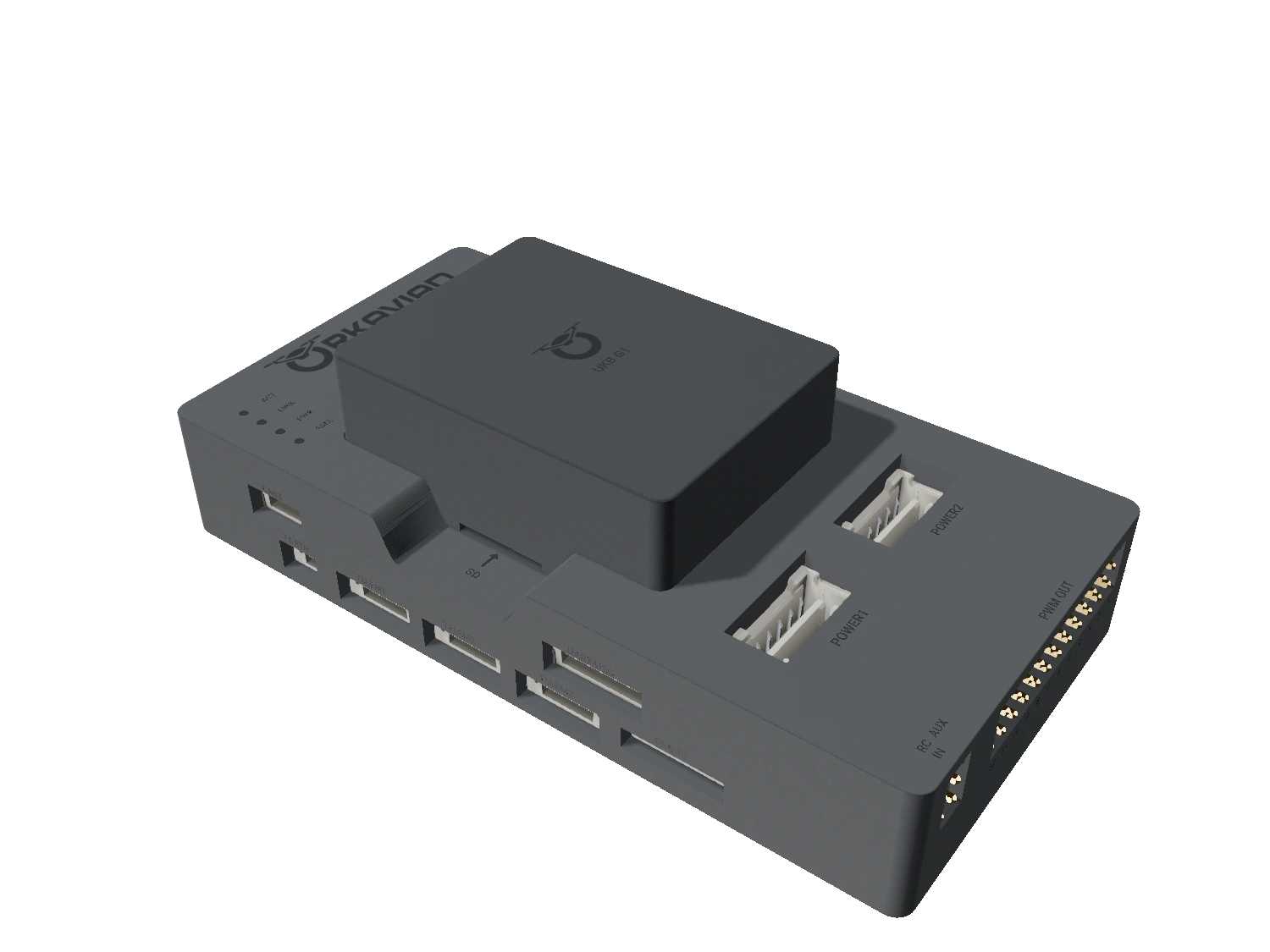
UKB-E1

Dual-core flight control with finned aluminum cooling.

UKB-E1 is a Pixhawk v6X-RT–based flight controller built around an industrial i.MX RT1176, with an 800 MHz Cortex-M7 and a 400 MHz Cortex-M4. Three IMUs, two barometers and a magnetometer provide onboard sensing. The carrier exposes 12 PWM outputs, three CAN ports and single-pair Ethernet, while the finned aluminum enclosure provides passive cooling.

Loading the 3D model…

Drag to rotate. Scroll to zoom.
Cortex-M7 maximum
800 MHz
MCU junction rating
−40…+105 °C
Direct actuator outputs
12 PWM

01 / ENGINEERING ADVANTAGES

Hardware features

01

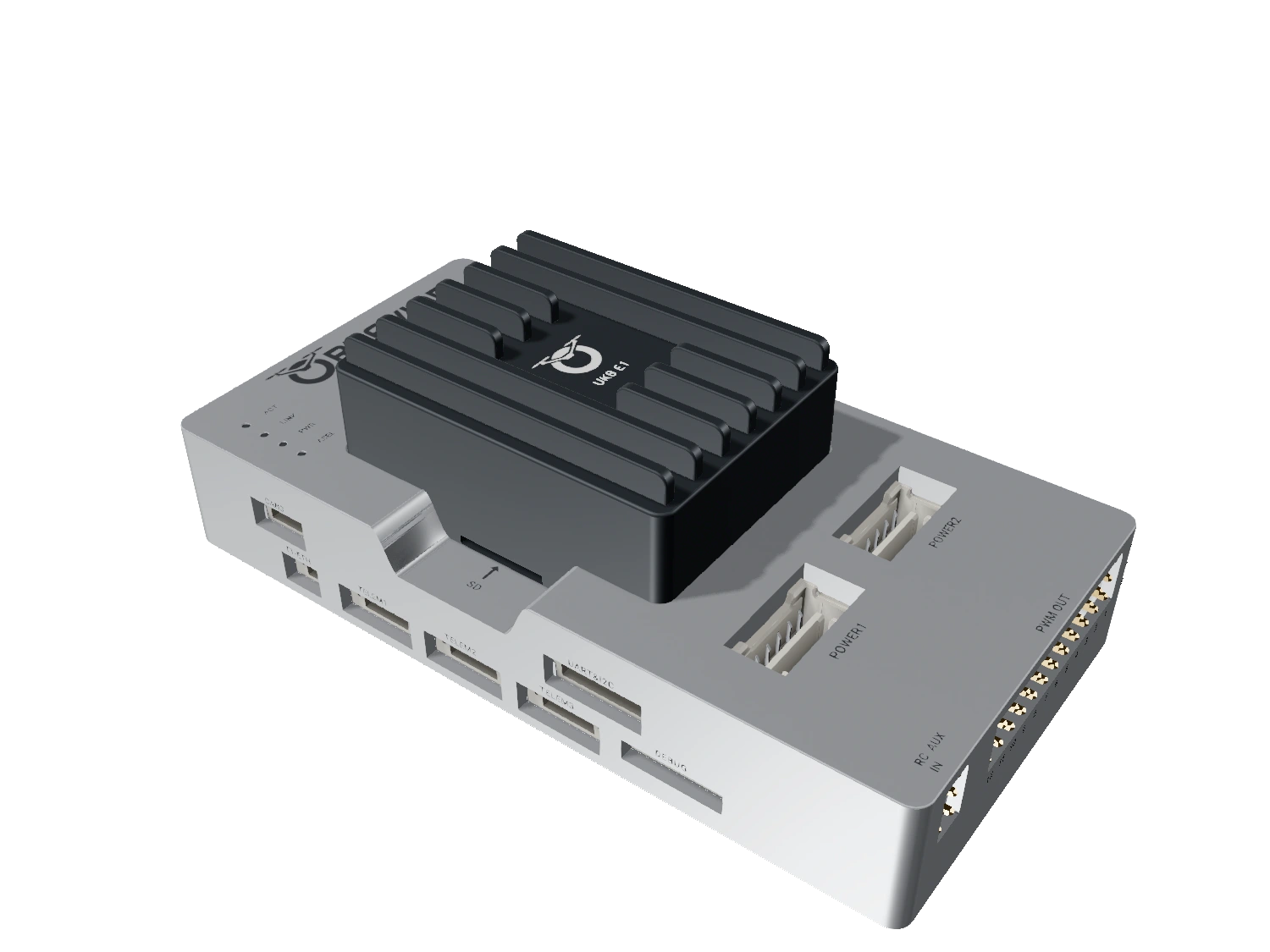
Passive aluminum cooling

The aluminum controller cover conducts heat away from the processor. Rounded fins increase the surface area available for heat transfer without adding a fan.

02

Three IMUs and dual barometers

Two ICM-45686 sensors and a BMI088 provide three inertial measurement units. Two BMP390 barometers and a BMM350 magnetometer complete the sensor set; the separate rigid-flex sensor assembly provides mechanical vibration isolation.

03

Actuator and vehicle interfaces

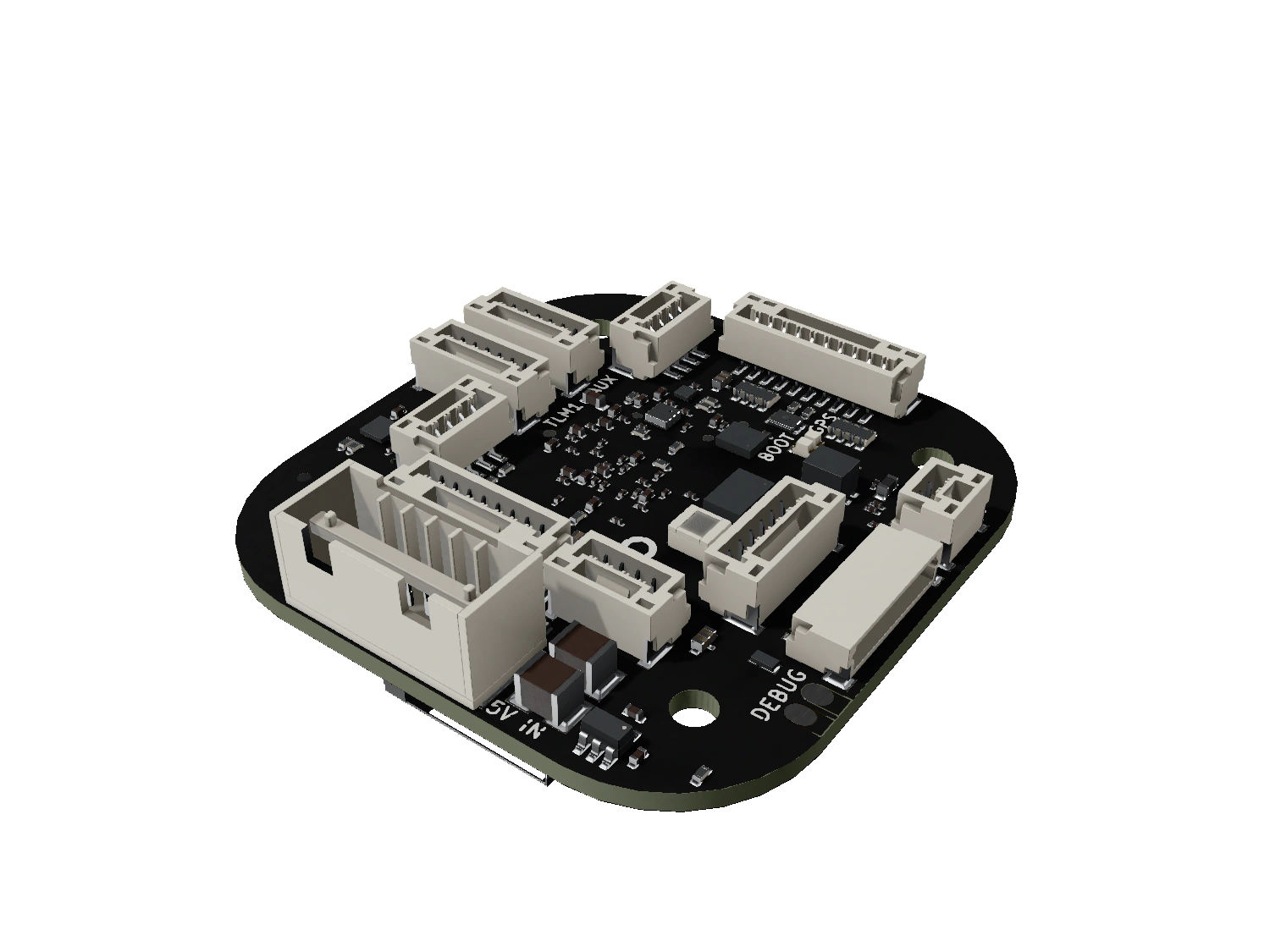
Twelve direct PWM outputs connect to the actuation system. Dual GPS ports, three telemetry UARTs with hardware flow control, three CAN ports and 100BASE-T1 Ethernet provide dedicated connections for navigation, radios and onboard equipment.
Specifications

Maximum core clocks
Cortex-M7 ≤800 MHz; Cortex-M4 ≤400 MHz
MCU junction rating
−40 to +105 °C
Memory
2 MB RAM · 64 MB octal-SPI NOR · 32 KiB FRAM
Inertial sensors
2 × ICM-45686 + BMI088
Pressure and heading sensors
2 × BMP390 + BMM350
Enclosure
Aluminum
Enclosure dimensions
94.9 × 48.9 × 31.1 mm
Storage
microSD
USB
USB-C
Debug interfaces
SWD · serial debug
PWM outputs
12 direct signal outputs
GPS and telemetry
2 GPS ports · 3 telemetry UARTs with RTS/CTS
CAN and Ethernet
3 CAN ports · 100BASE-T1 single-pair Ethernet
Peripheral interfaces
External SPI · I²C · auxiliary UART · RC IN · AUX
Power input
POWER1 / POWER2: regulated 5.00–5.25 V; digital power-module I²C
UKB-E1 design visualization

Use cases

  • Demanding field operations. Robotic platforms for remote sites and demanding thermal conditions, with an aluminum enclosure that carries heat away from the flight controller.
  • Critical infrastructure inspection. Inspection robots for energy, transport and industrial infrastructure, carrying cameras and sensors into areas that are difficult or risky for people to reach.
  • Autonomous logistics. Cargo platforms moving supplies, tools and equipment between facilities and remote locations without depending on road access.
  • Emergency response. Aerial and ground robots supporting search, damage assessment and response coordination where teams need a clear view before entering the scene.
  • Mapping and exploration. Survey platforms combining navigation, positioning and sensing for terrain mapping, resource exploration and large-site planning.