UKB-G1

Dual-core flight control in a 3D-printed enclosure.

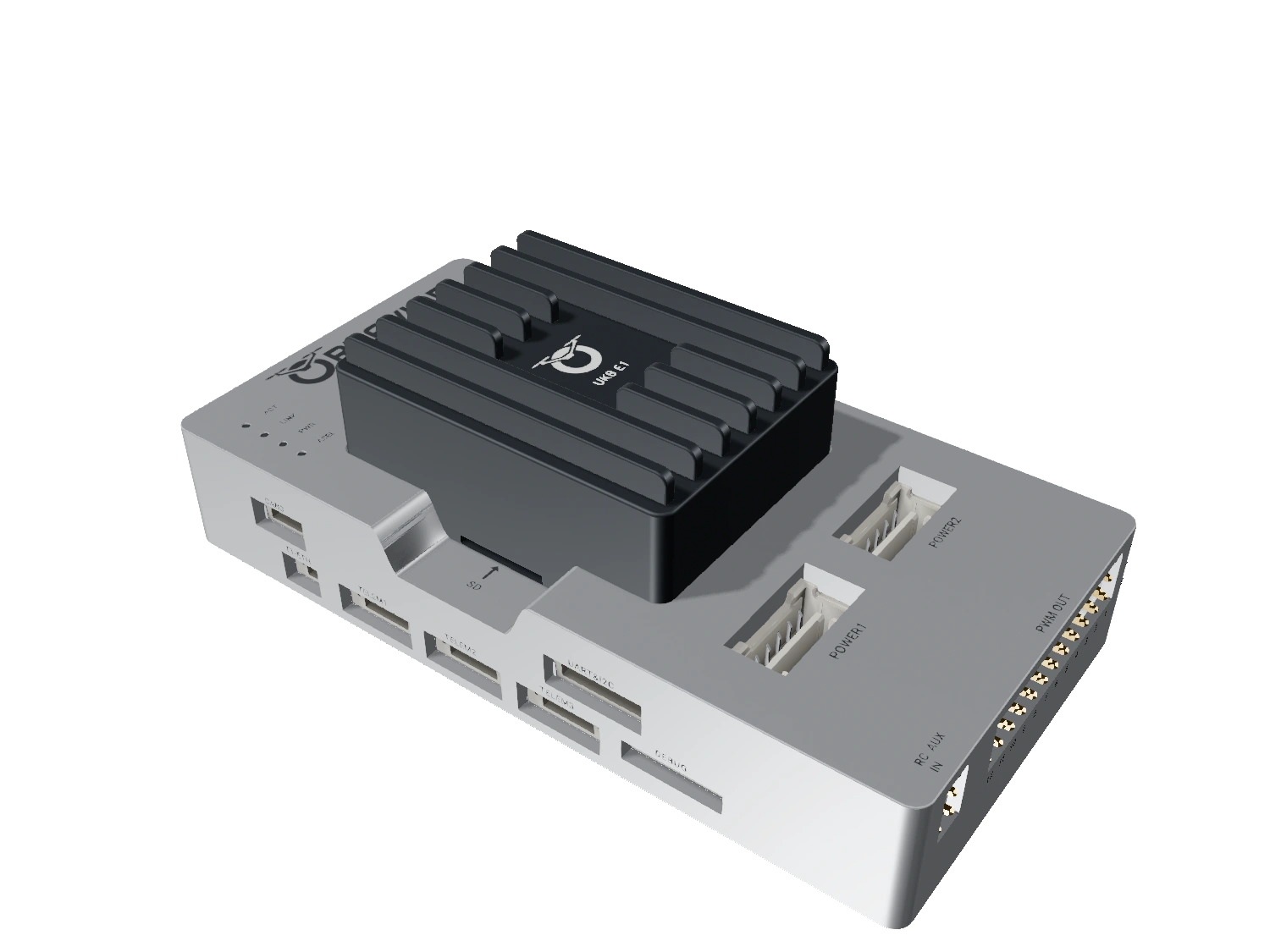
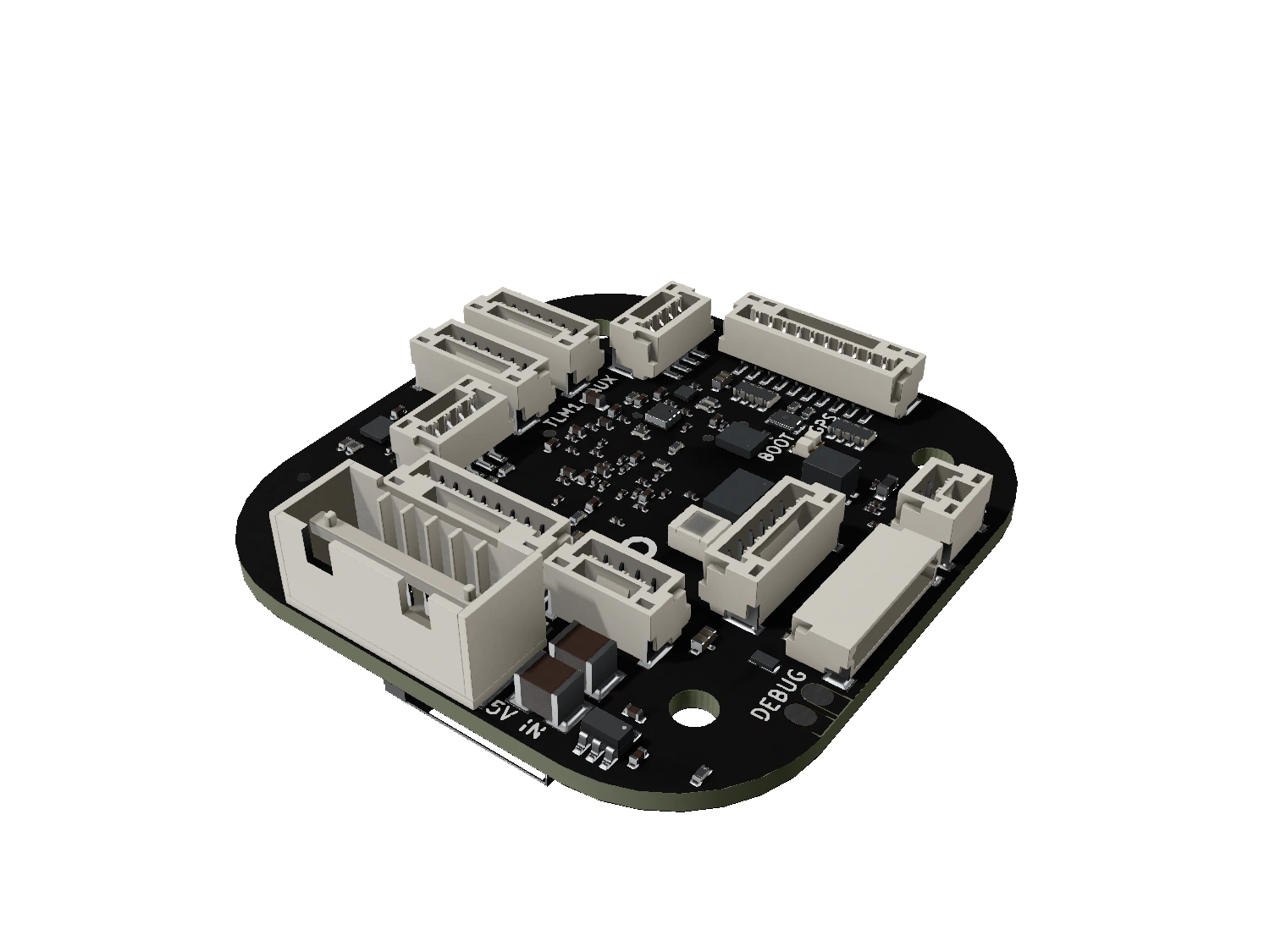
UKB-G1 is a general-purpose flight-controller design based on Pixhawk v6X-RT. Its i.MX RT1176 configuration targets a 1 GHz Cortex-M7 and a 400 MHz Cortex-M4 in a 3D-printed polymer enclosure. Three IMUs, dual barometers, 12 PWM outputs and dedicated GPS, telemetry, CAN and Ethernet connections support vehicle integration.

Loading the 3D model…

Intended Cortex-M7 maximum
1 GHz
MCU junction grade
0…+95 °C
Actuator outputs
12 PWM

01 / ENGINEERING ADVANTAGES

Hardware features

01

Dual-core processing

The specified processor configuration targets up to 1 GHz on the Cortex-M7 and 400 MHz on the Cortex-M4. The design includes 2 MB of on-chip RAM, 64 MB of external NOR flash and 32 KiB of FRAM.

02

Integrated flight sensors

Two ICM-45686 IMUs and a BMI088 supply inertial measurements. Dual BMP390 barometers and a BMM350 magnetometer add pressure and magnetic-field sensing, with a separate vibration-isolated sensor assembly.

03

Printed polymer enclosure

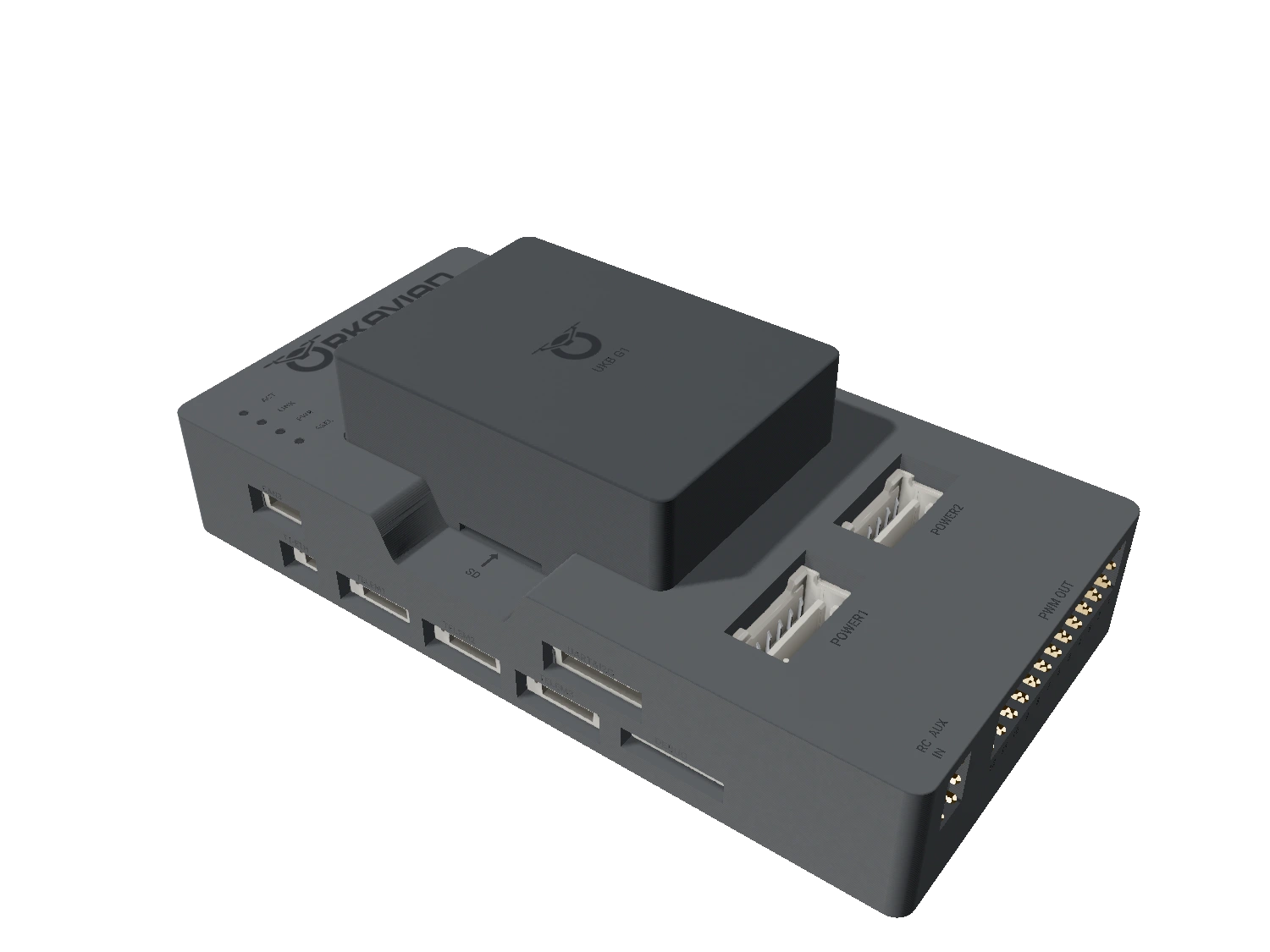
The polymer enclosure has a flat controller cover and dedicated openings for the fixed connector layout. Its 94.9 × 48.9 mm footprint accommodates the controller, sensor assembly and carrier, with access to the microSD card and USB-C connection.
Specifications

Target maximum core clocks
Cortex-M7 ≤1 GHz; Cortex-M4 ≤400 MHz
Target MCU junction grade
0 to +95 °C
Memory
2 MB RAM · 64 MB octal-SPI NOR · 32 KiB FRAM
Inertial sensors
2 × ICM-45686 + BMI088
Pressure and heading sensors
2 × BMP390 + BMM350
Enclosure
3D-printed polymer
Enclosure dimensions
94.9 × 48.9 × 27.6 mm
Storage
microSD
USB
USB-C
Debug interfaces
SWD · serial debug
PWM outputs
12 direct signal outputs
GPS and telemetry
2 GPS ports · 3 telemetry UARTs with RTS/CTS
CAN and Ethernet
3 CAN ports · 100BASE-T1 single-pair Ethernet
Peripheral interfaces
External SPI · I²C · auxiliary UART · RC IN · AUX
Power input
POWER1 / POWER2: regulated 5.00–5.25 V; digital power-module I²C
UKB-G1 design visualization

Use cases

  • Remote field operations. Autonomous platforms for remote worksites and mobile operations, combining flight control with onboard computing when access to outside support is limited.
  • Critical infrastructure inspection. Inspection robots for energy, transport and industrial infrastructure, carrying cameras and sensors into areas that are difficult or risky for people to reach.
  • Autonomous logistics. Cargo platforms moving supplies, tools and equipment between facilities and remote locations without depending on road access.
  • Emergency response. Aerial and ground robots supporting search, damage assessment and response coordination where teams need a clear view before entering the scene.
  • Mapping and exploration. Survey platforms combining navigation, positioning and sensing for terrain mapping, resource exploration and large-site planning.